Concrete Curbing With a Deep Charcoal Slate Stamp in Rogers
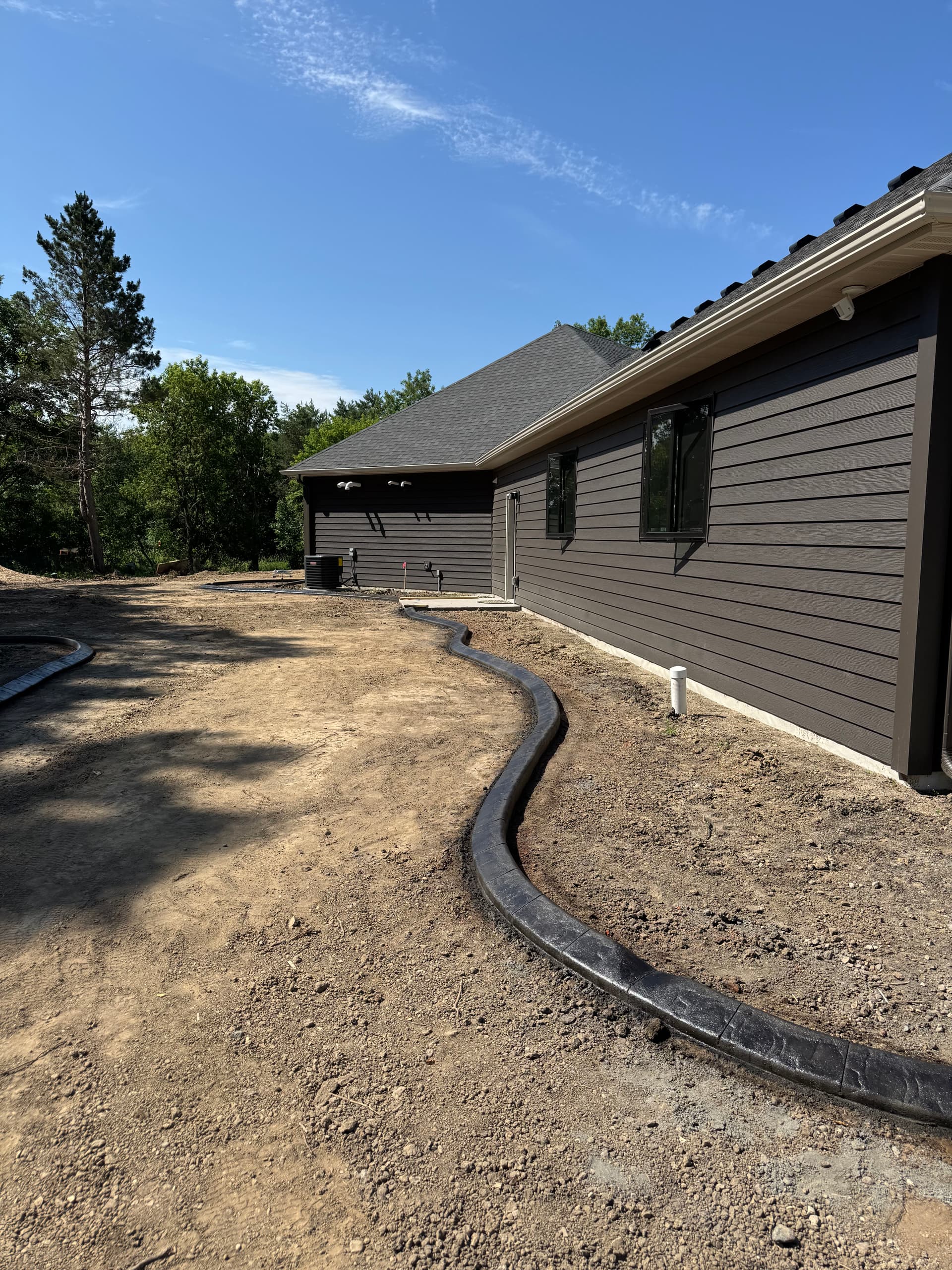
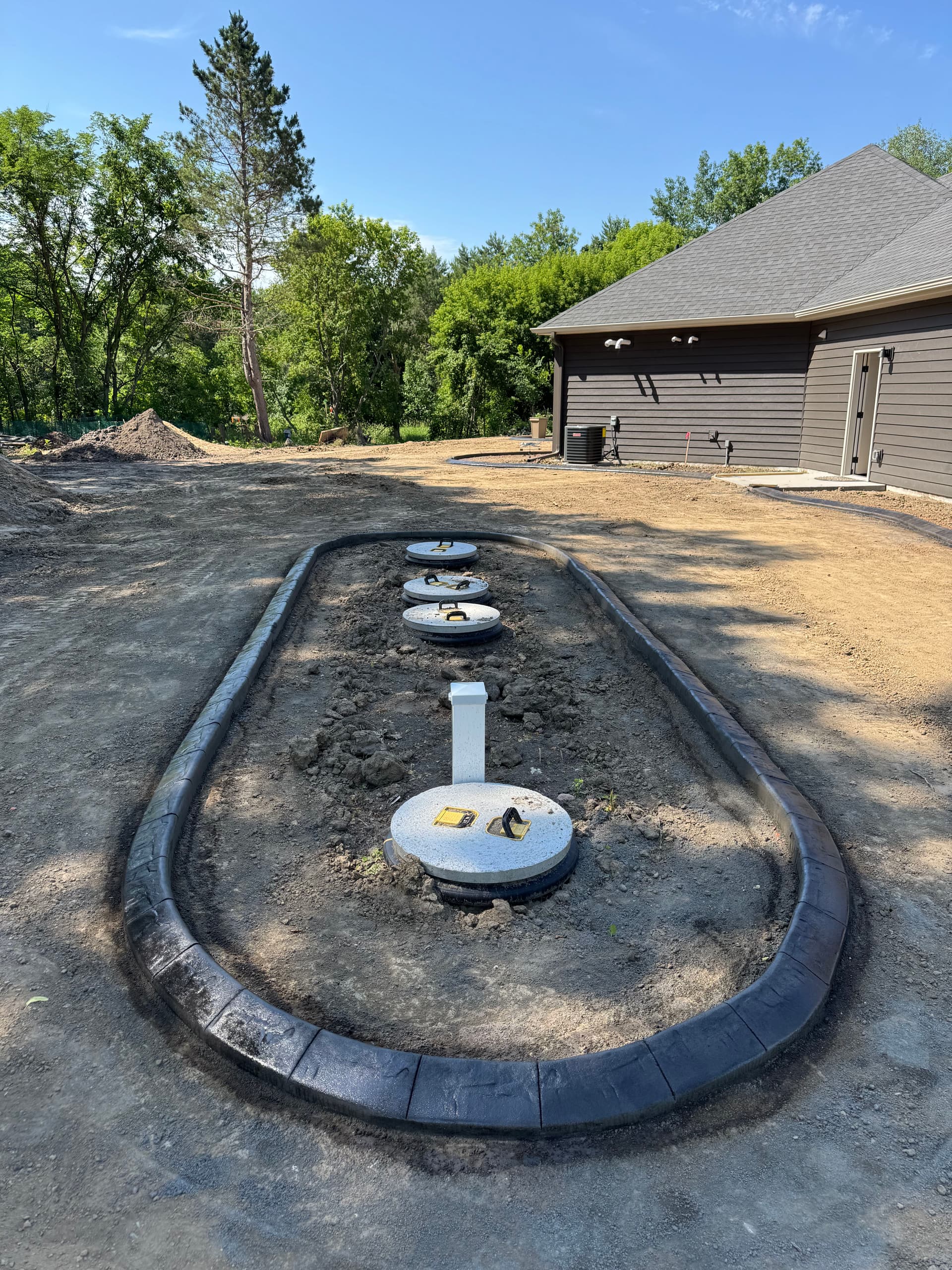
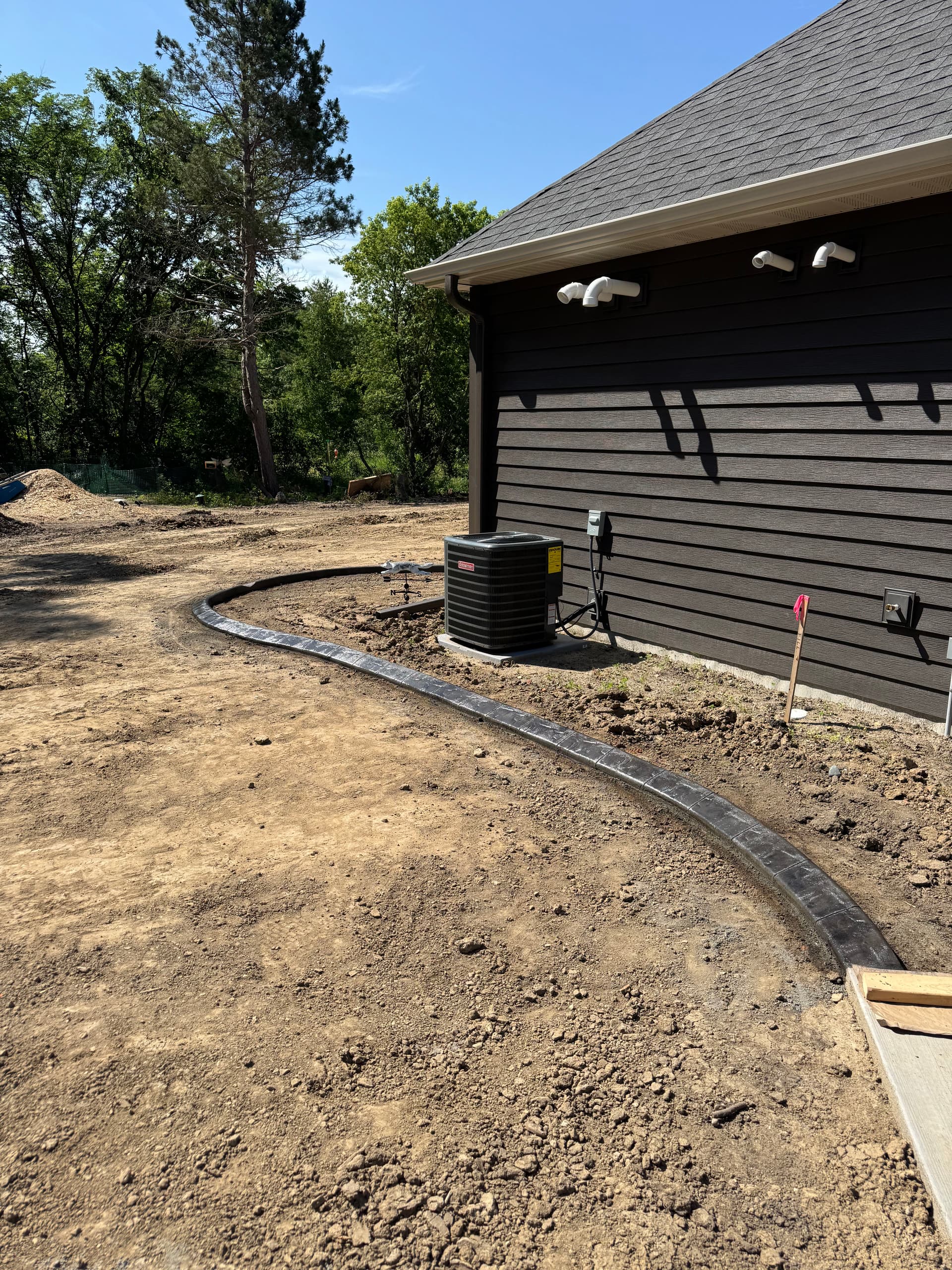
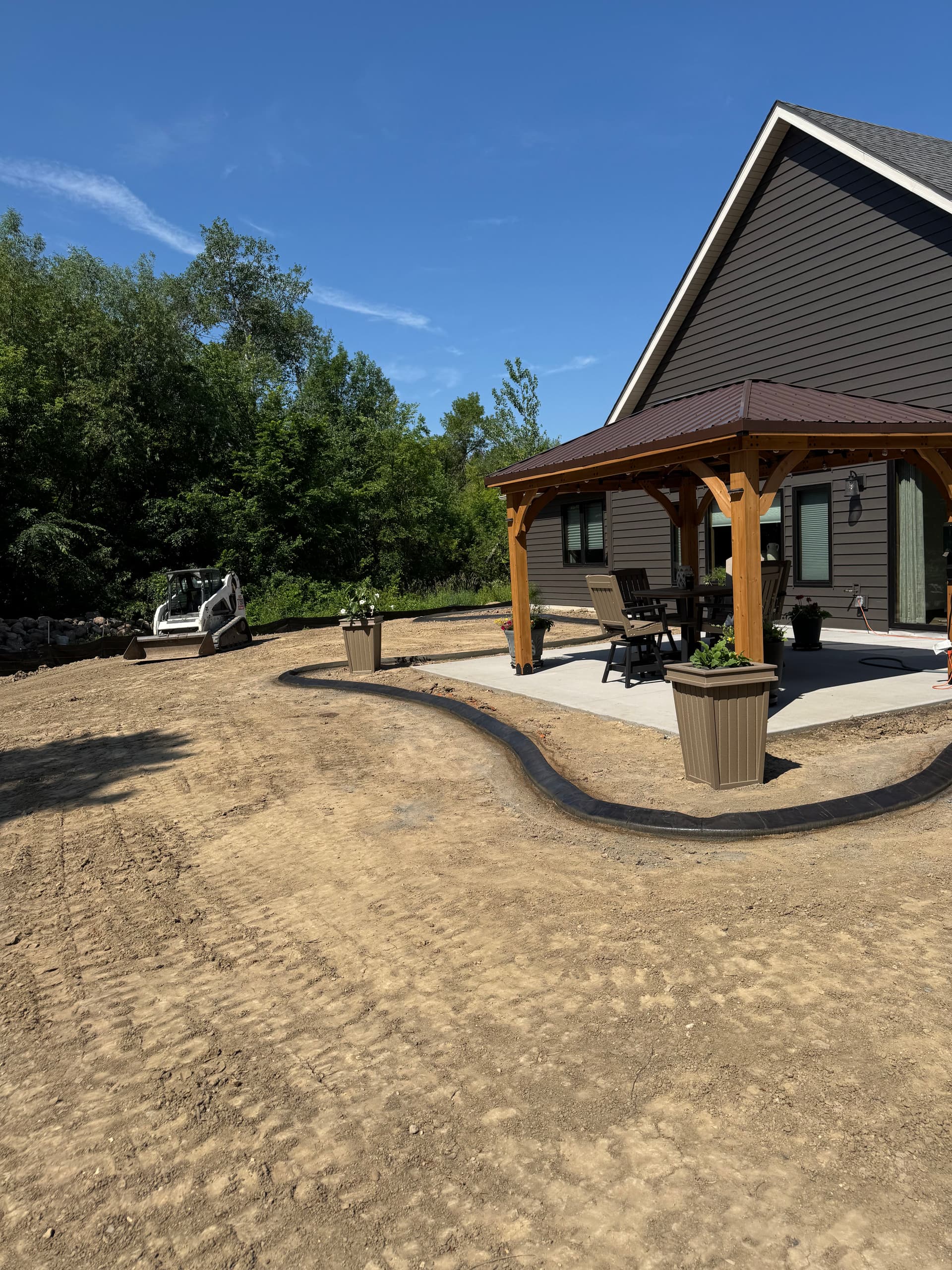
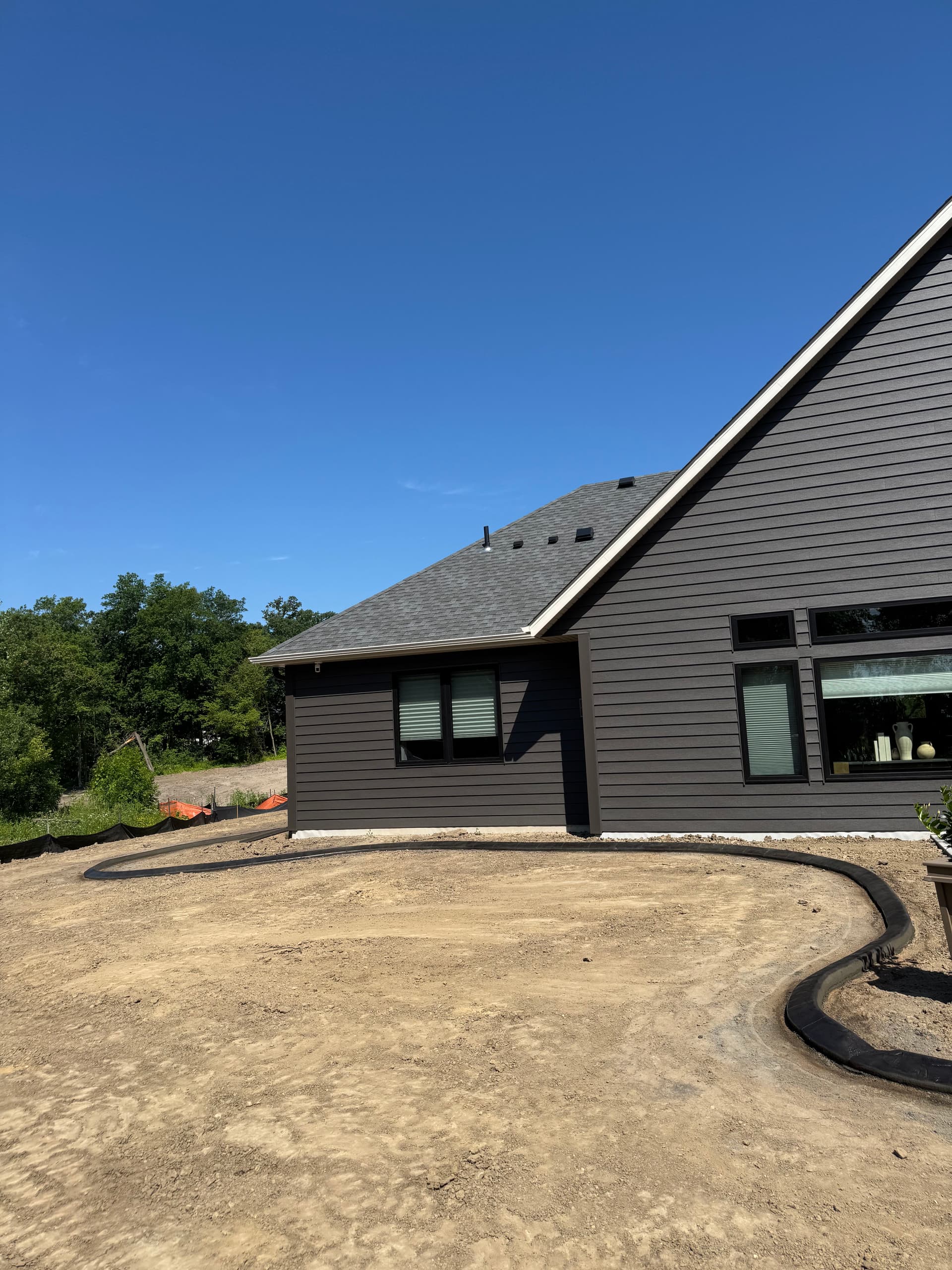
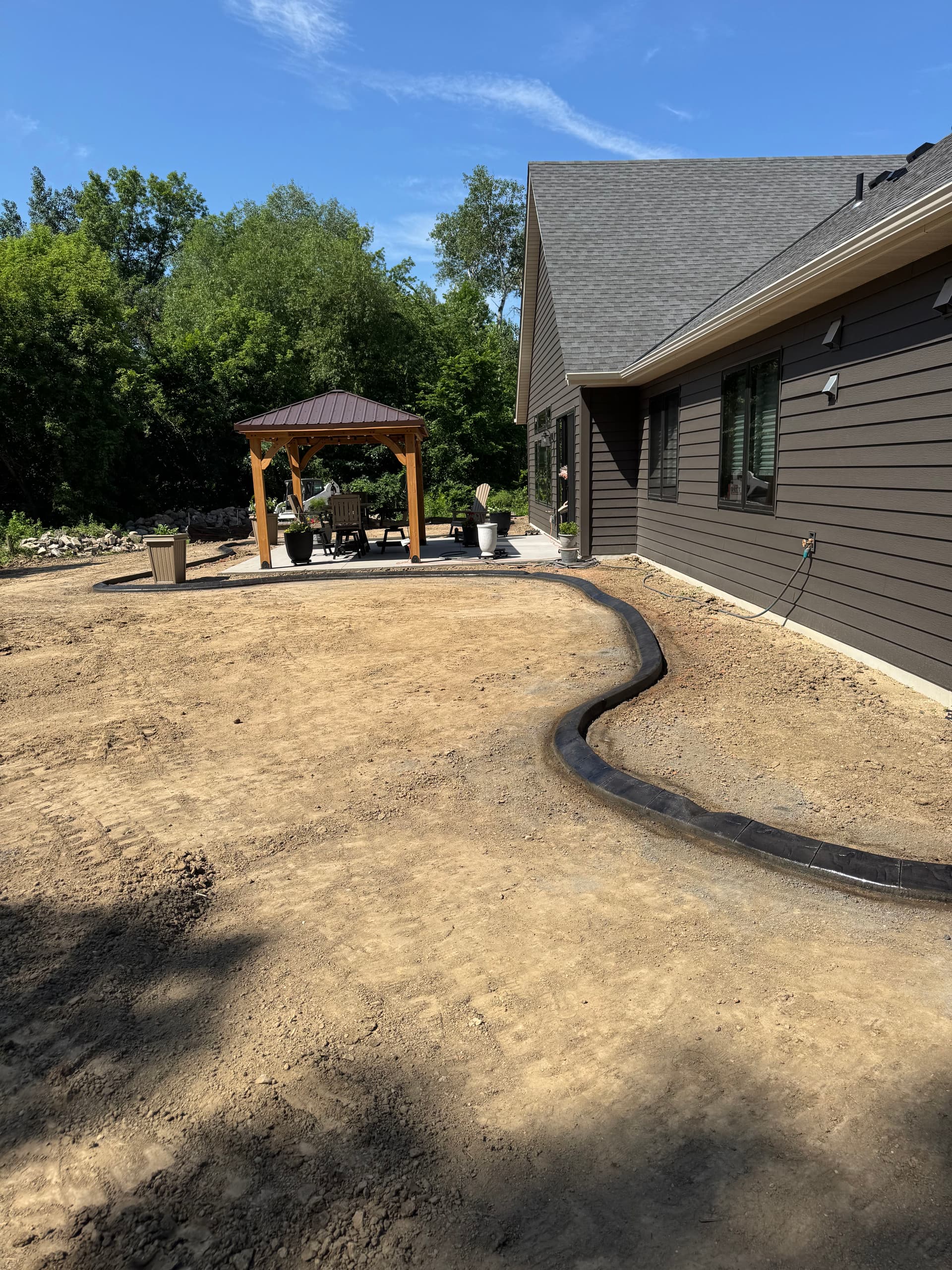
This Rogers home was a blank canvas - fresh construction, open yard, and no real definition between the lawn area, the foundation beds, and the patio space. That's exactly where concrete curbing does its best work. Before any plants go in the ground, you lock in the structure first.
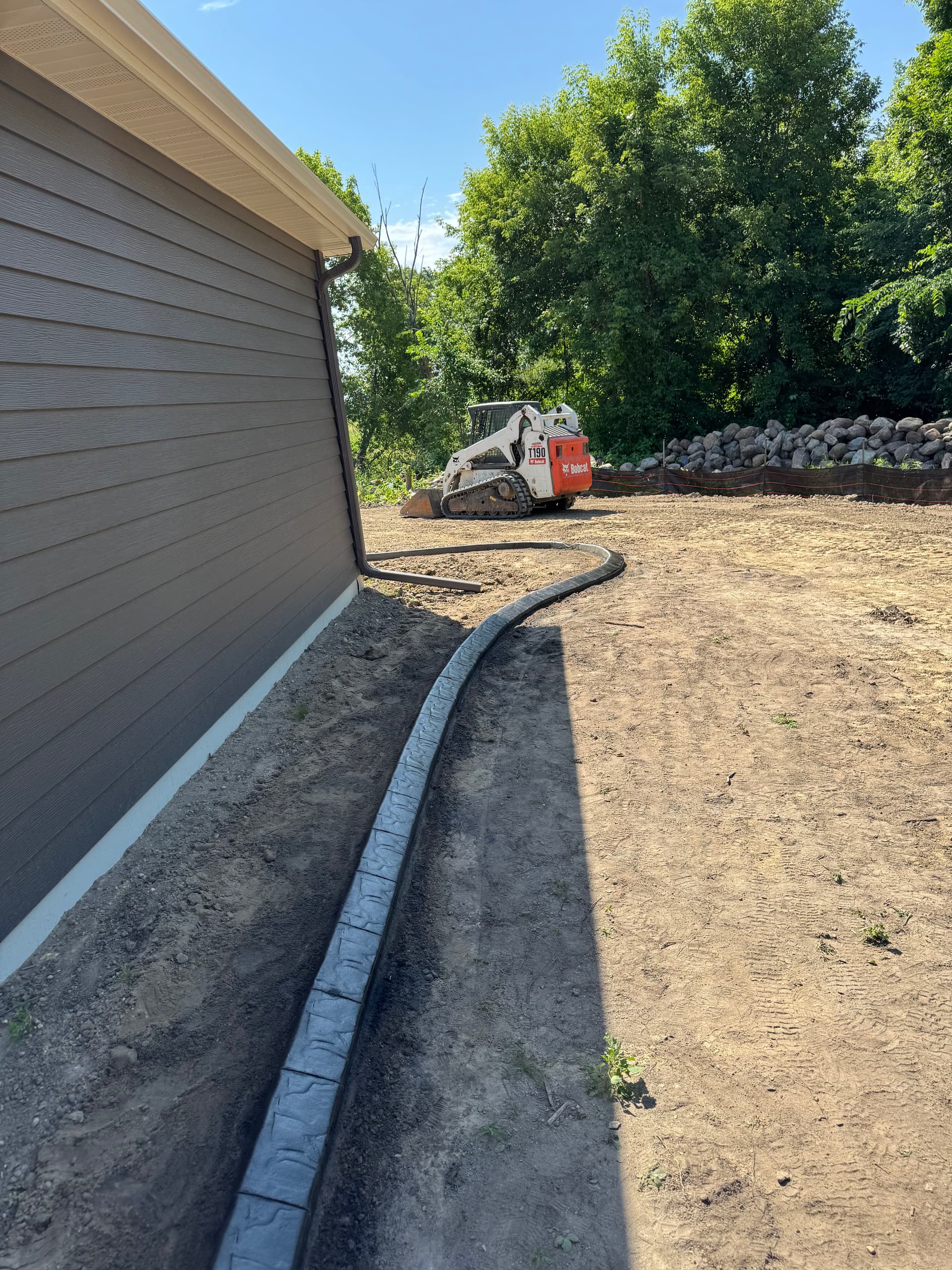
We ran deep charcoal concrete curbing with a slate stamp all the way around the property. Along the foundation, out toward the back patio, wrapping a separate bed area in the yard - the curbing follows the natural flow of the space without forcing anything into a rigid straight line. The gentle curves keep it feeling natural while still giving everything a finished, intentional look.
The slate stamp texture is a nice detail. It breaks up what would otherwise be a flat, plain curb and gives it a little visual interest that holds up well against the dark siding on this home. The charcoal color ties it all together rather than competing with the exterior.
Here's the practical side of it - once this yard gets seeded, landscaped, and planted out, those beds are already defined. No creeping grass edges, no mulch migrating into the lawn, no guesswork about where one zone ends and another begins. The curbing acts as a permanent barrier so the landscaping work that follows actually stays put.
Concrete curbing is one of those upgrades that pays for itself in reduced maintenance alone. It's clean, it's durable, and it makes every future landscaping decision easier because the framework is already there.